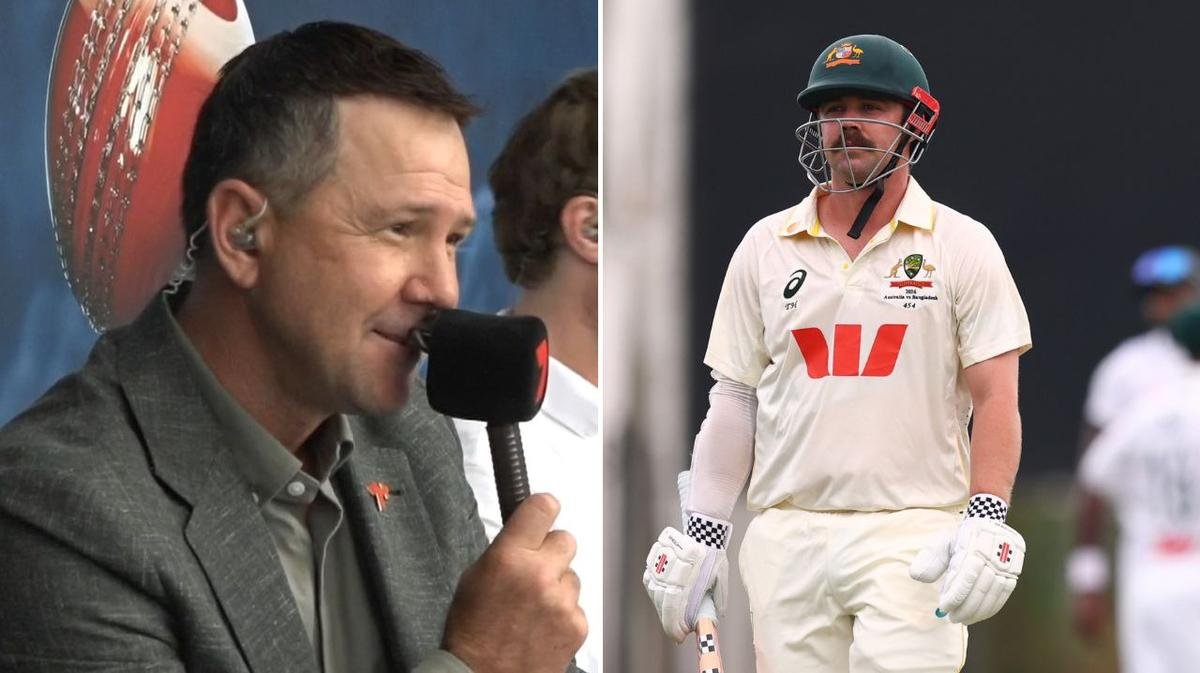
Ricky Ponting was extremely concerned about Australia’s performance and tactics during the match. He underlined the decision to bat first after winning the toss, saying that the home team’s seamers were in a better position. The former skipper felt that Australia had missed a significant opportunity to strengthen the depth of their team during these two Test matches against Bangladesh. “There was a lot of early-season rustiness,” he said.
Australia was dismissed for 198 in the first innings of the inaugural Test match against Bangladesh at Marrara Stadium in Darwin from August 13–17, 2026. Steve Smith led the way with 71, but Hasan Mahmud collected 6 for 55 as the batting team battled against Bangladesh’s attack. Former Australian captain Ricky Ponting gave the performance scathing criticism.
You can’t overlook some of the technical problems and shortcomings we observed, especially from the top order, even tho they haven’t played in a while. Given that Bangladesh finished the warm-up match at just 54, I was shocked that Australia really decided to bat. Speaking on the SEN’s Fireball, Ponting stated, “The Australian seamers on that wicket yesterday morning would have been nearly unplayable.”
Why Ponting disapproved of Australia’s toss choice
Ponting pointed out that Australia’s total fell short of expectations given the opposition’s recent performance. He stressed that the team should consider introducing younger players to the Test system rather than relying solely on the current squad. “Everyone is expecting a few more than 190 against an attack like that when you win the toss and decide to bat,” the former skipper emphasised, highlighting the importance of controlling the team’s age profile while building for the future.
I continue to believe that they lost a chance to examine some of Australia’s younger prospects throughout these two games. Since the present team hasn’t looked up to the standard of Test cricket for a few years, Ponting advised using some intuition and spotting talent.
Ponting had previously advocated for the development of younger players like Ollie Peake and Campbell Kellaway in these two Test matches against Bangladesh. He expressed worries about the possibility of starting young players in more challenging situations during the next trip of South Africa.
Australia’s age distribution and prospects
Australia’s roster composition reflects a significant age challenge in anticipation of a difficult period. The team from yesterday is the oldest since 1928, with Cameron Green being the youngest player and everyone else being well over thirty. The team will play 21 Tests till the World Test Championship is over, including home matches against New Zealand and away trips to South Africa and India.
“You talk about an ageing team and a reconstruction since yesterday’s squad is the oldest since 1928. That is the situation. Everyone on the team is well over thirty, with Cameron Green being the youngest. The World Test Championship will conclude with 21 Test matches. “They are in New Zealand, they are in South Africa, and they are in India,” Ponting stated.
Ponting expected that during this demanding schedule, Australia will need to rotate their squad. He suggested that the team would inevitably recruit fresh players to manage tiredness and provide depth throughout the Test format.
“They will undoubtedly use 16–18 players throughout this short spell. Therefore, I believe that naturally, guys will start to come in and out to attempt to manage them thru to the very end,” Ponting stated.
Australia is in a challenging position as Bangladesh’s lead in the first Test has already exceeded 100 runs. The home squad must bat incredibly well to win this Test match.