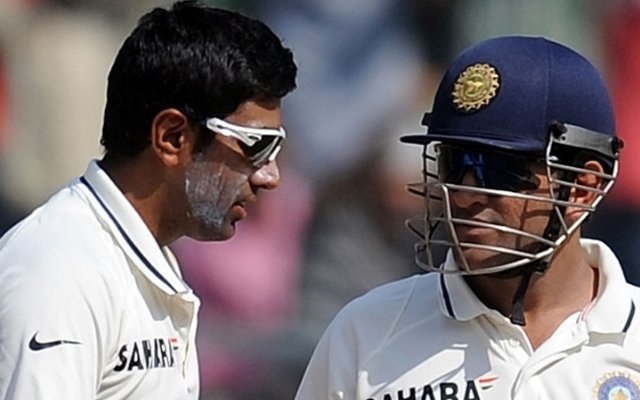
Ravichandran Ashwin has exposed an interesting facet to MS Dhoni’s captaincy. He explains how, during Test matches, the former captain of India closely monitored bowlers who were approaching five-wicket milestones and purposefully prolonged their periods against lower-order batsmen to assist them do it.
By paying attention to such circumstances in a way that went beyond typical captaincy, Dhoni demonstrated a sympathetic attitude toward recognising individual successes. The well-known off-spinner, who declared his retirement from international cricket in December 2024, claimed that although most captains are still aware of these opportunities, Dhoni’s follow-through was constantly exceptional.
“I don’t typically ask for the ball when something like a five-wicket haul is at stake. It’s interesting to note that MS Dhoni used to constantly monitor these issues. He even apologised to me once. He withdrew me from the attack after I had taken four wickets at Wankhede. “I was standing at point, the innings ended, the Test match finished, and he removed the stumps.”
He saw that I had taken four wickets when he looked at the scoreboard after removing the stumps. “Oh, you were on four wickets?” he then remarked. I’m sorry, dude. Thus, it is true that captains typically monitor these issues. He stated on JioStar, “They usually give a bowler another spell against the tail-enders if he is on four wickets.”
The significance of Dhoni’s awareness off the pitch
The narrative captures Dhoni’s character both during and after the game. After the game, the former captain of the Chennai Super Kings made a deliberate effort to own up to his error, demonstrating genuine respect for a bowler’s individual accomplishment.
With 37 five-wicket hauls at the end of his Test career in international cricket, Ashwin shared fourth place on the all-time record.
His evaluation reveals a little-known aspect of Dhoni’s leadership that extended beyond tactical decisions made while playing. His desire to support bowlers at critical junctures in their careers and his awareness of individual accomplishments served as inspiration for his leadership style. Such captainly backing was essential for a cricket player aiming for a noteworthy record in the high-stress environment of Test cricket.