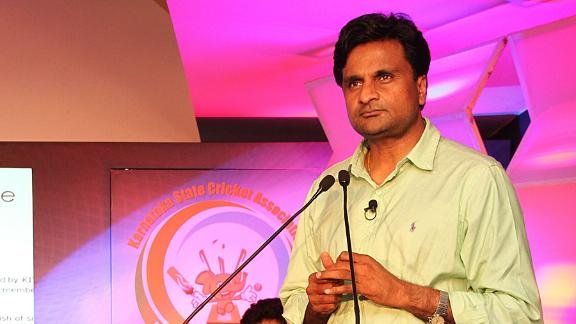
In order to prevent injuries and maintain team performance, former India speed star Javagal Srinath has underlined how important it is to have a strong group of fast bowlers and manage their workload. The 56-year-old underlined how the framework of a speed assault has a direct impact on team performance and individual conditioning.
Srinath relied from his own experience as a pace bowler who, without consistent support from other quick bowlers, was India’s primary fast-bowling option for most of his career.
“I’ve always believed that fast bowling is about a team of bowlers working together. It has to do with energy conservation, and you will be able to assemble a strong squad. However, you will bowl 16–17 overs and lose effectiveness if you are by yourself. During a panel discussion at the Events and Entertainment Management Association conclave, Srinath stated, “Your team is always effective if you have three or four good quicks, and the striking ability is far better.”
Why having multiple fast bowlers is essential to a team’s effectiveness
Srinath stressed that sudden jumps in bowling intensity and a lack of match practice put fast bowlers in dangerous situations. The risk of muscle pulls and ligament issues increases significantly when a bowler is forced to bowl lengthy stretches during a match despite having little game time. “If you don’t bowl enough and all of a sudden if you are bowling the third spell, that is around 3.30 p.m., you end up pulling a muscle or probably tearing your ligament or hamstring or whatever.” In order to be in excellent shape, it is crucial that you play sufficiently, which entails 1000–1600 overs annually, according to Srinath.
The importance of maintaining a consistent bowling workload in avoiding injuries
With speed bowler injuries becoming a significant problem in recent years, Srinath’s advise on preventive workload control is becoming more and more relevant. His shoulder surgery in 1997 brought to light the physical demands of long-term fast bowling at the highest level.
After the match-fixing episode in the 1990s, Srinath not only managed his workload but also thot about India’s cricket history. He credited the Indian team’s collective motivation during that period for the sport’s reinstatement and the growth of a winning culture both at home and abroad.
“A lot of things went well for us after the match-fixing affair. Every player, in my opinion, was somewhat determined to restore that reputation and demonstrate to the world that cricket was a clean sport. Each person shown leadership. The team thereafter began to win both domestically and internationally, according to Srinath.